Musicians Obsess Over Sound but Often Overlook Hearing: Why Musicians Need Custom Hearing Protection
Musicians Obsess Over Sound but Often Overlook Hearing: Why Musicians Need Custom Hearing Protection
Mar 30, 2026
You dedicate countless hours to perfecting your craft, and you invest in microphones, monitors, acoustic treatment, and the latest gear. Every rehearsal, mixing session, and live performance is a testament to your passion for music.
Yet amidst all this focus on sound quality, your most irreplaceable asset, your hearing, often goes unprotected.
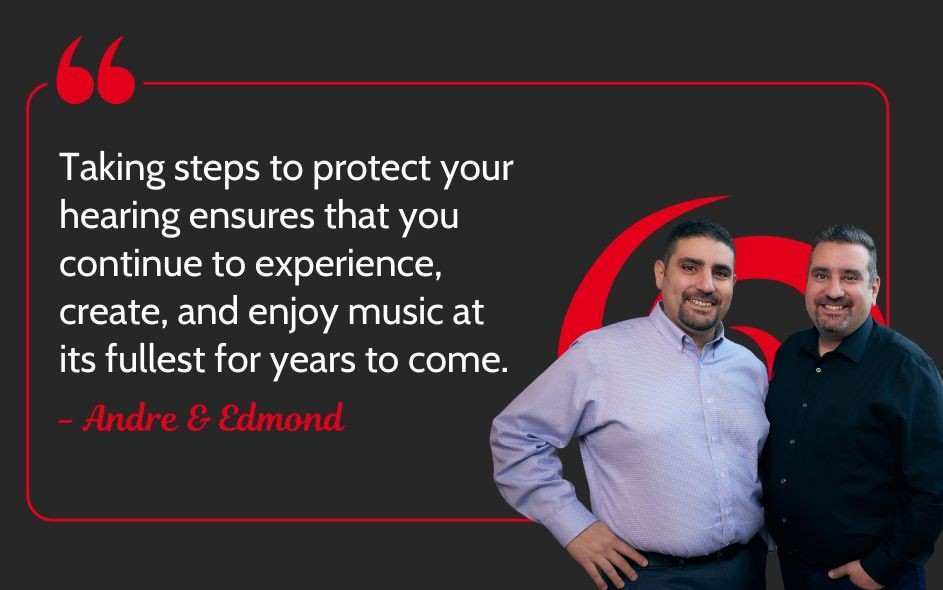
Your ears are the foundation of your art; while you can upgrade equipment and fine-tune your setup, you only get one set of ears. Taking steps to protect your hearing ensures that you continue to experience, create, and enjoy music at its fullest for years to come.
Understanding Sound Exposure in Real-World Environments
You encounter a range of sound levels in your musical journey, from the quiet of a studio to the intensity of a live venue. The risk to your hearing increases with both the loudness of the sound and the duration of exposure.
Sound is measured in decibels (dB), and experts agree that exposure to sounds above 85 dB for extended periods can damage your hearing.
Consider these real-world scenarios:
Rehearsal Rooms: Small, untreated rooms can amplify sound intensity, especially when multiple instruments are involved.
Live Venues: Drums, amplified guitars, and powerful stage monitors often exceed safe sound levels.
Cumulative Exposure: Each rehearsal, gig, or mixing session adds up over time, increasing your risk even if the exposure doesn’t seem extreme in the moment.
Understanding how sound exposure works helps you make informed decisions about your hearing health. You benefit from recognizing the environments that pose the highest risk and taking proactive steps to protect yourself.
The Long-Term Risk Musicians Shouldn’t Ignore
Hearing damage often develops gradually, making it easy to overlook until it becomes a significant problem. You benefit from early action, as consistent protection helps prevent irreversible changes to your hearing.
Noise-induced hearing loss is the second leading cause of acquired hearing loss, and musicians are especially at risk.
Tinnitus, a persistent ringing or buzzing in the ears, is another common issue. You might notice temporary ringing after a loud rehearsal or show; this is a clear warning sign that your ears have been exposed to harmful sound levels.
Why Generic Earplugs Don’t Work Well for Musicians
You might have tried foam earplugs or off-the-shelf solutions, only to find they make music sound muffled or distorted. That’s because generic earplugs are designed for basic noise reduction; they don’t preserve the clarity and detail that musicians rely on.
Uneven Frequency Reduction: Foam plugs tend to cut high frequencies more than lows, altering the balance of the music.
Distorted Sound: The result is a dull, lifeless sound that makes it hard to monitor pitch, tone, and dynamics.
Compensating by Overplaying: When you can’t hear yourself clearly, you may play or sing louder, increasing your risk of hearing damage.
Inconsistent Protection: Poor fit leads to gaps, letting harmful sound levels reach your ears.
You deserve hearing protection that works with you, not against you.
What Makes Custom Hearing Protection Different
Custom hearing protection is designed specifically for musicians like you who value clarity, comfort, and consistency.
Precision Fit: Custom earplugs are moulded to your unique ear canal, ensuring a secure, comfortable fit that stays in place during performances and rehearsals.
Even Attenuation: These plugs reduce sound evenly across all frequencies so you hear the full spectrum of music without distortion.
Tonal Balance Maintained: You can monitor pitch, dynamics, and nuance with confidence.
Long-Term Durability: Custom solutions are built to last, making them a smart investment in your career and hearing health.
When you choose us for custom hearing protection in Toronto and Scarborough, you can rest assured that your ears are protected without sacrificing the quality of your music.
Who Should Consider Custom Protection?
If you’re regularly exposed to loud music, custom hearing protection is for you. This includes:
Performing musicians (soloists, bands, orchestras)
Music teachers and instructors
DJs and club performers
Concertgoers and avid music fans
Studio engineers and producers
Students enrolled in music programs
You don’t have to be a professional to be at risk; frequency and duration of exposure are what matter most. Investing in professional hearing care is a proactive step you can take to safeguard your future in music.
Protect the Instrument You Cannot Replace
Your hearing is the gateway to nuance, pitch, balance, and timing. Protecting it means supporting your longevity and success in music. Custom solutions offer the comfort and clarity you need to perform at your best, without compromise.
Explore your options for hearing protection and take the first step toward securing your most important instrument: your hearing.
If you have any questions or concerns, please don’t hesitate to get in touch with our team. Rest assured that we’re here to help every step of the way on your hearing health journey.
Frequently Asked Questions (FAQ)
Q: How do I know if I need custom hearing protection as a musician?
A: If you regularly rehearse, perform, or attend loud music events, you’re at risk for cumulative hearing damage. Temporary ringing after sessions, difficulty hearing nuances, or frequent exposure to amplified sound are clear signs that you would benefit from custom protection. Even if you haven’t noticed symptoms yet, early prevention is always best.
Q: What’s the difference between custom musician earplugs and regular foam earplugs?
A: Custom musician earplugs are moulded to your ears and designed to reduce sound evenly across all frequencies, preserving the natural balance of music. Foam earplugs, by contrast, muffle and distort sound, making it hard to monitor your performance. Custom plugs provide comfort, clarity, and reliable protection during long sessions.
Q: How can I get custom hearing protection in Toronto or Scarborough?
A: You can schedule an appointment at our specialized clinic offering custom hearing protection in Toronto and Scarborough. A hearing health professional will assess your needs, take precise ear impressions, and fit you with protection tailored to your unique requirements. This ensures you receive the best possible care and long-term support for your hearing health.
Source
Hearing Health & Technology Matters: Curious about the differences between basic hearing protection and custom earplugs for musicians? Find out more here.
Request a Callback
Search
Musicians Obsess Over Sound but Often Overlook Hearing: Why Musicians Need Custom Hearing Protection
Mar 30, 2026
You dedicate countless hours to perfecting your craft, and you invest in microphones, monitors, acoustic treatment, and the latest gear. Every rehearsal, mixing session, and live performance is a testament to your passion for music.
Yet amidst all this focus on sound quality, your most irreplaceable asset, your hearing, often goes unprotected.
Your ears are the foundation of your art; while you can upgrade equipment and fine-tune your setup, you only get one set of ears. Taking steps to protect your hearing ensures that you continue to experience, create, and enjoy music at its fullest for years to come.
Understanding Sound Exposure in Real-World Environments
You encounter a range of sound levels in your musical journey, from the quiet of a studio to the intensity of a live venue. The risk to your hearing increases with both the loudness of the sound and the duration of exposure.
Sound is measured in decibels (dB), and experts agree that exposure to sounds above 85 dB for extended periods can damage your hearing.
Consider these real-world scenarios:
Rehearsal Rooms: Small, untreated rooms can amplify sound intensity, especially when multiple instruments are involved.
Live Venues: Drums, amplified guitars, and powerful stage monitors often exceed safe sound levels.
Cumulative Exposure: Each rehearsal, gig, or mixing session adds up over time, increasing your risk even if the exposure doesn’t seem extreme in the moment.
Understanding how sound exposure works helps you make informed decisions about your hearing health. You benefit from recognizing the environments that pose the highest risk and taking proactive steps to protect yourself.
The Long-Term Risk Musicians Shouldn’t Ignore
Hearing damage often develops gradually, making it easy to overlook until it becomes a significant problem. You benefit from early action, as consistent protection helps prevent irreversible changes to your hearing.
Noise-induced hearing loss is the second leading cause of acquired hearing loss, and musicians are especially at risk.
Tinnitus, a persistent ringing or buzzing in the ears, is another common issue. You might notice temporary ringing after a loud rehearsal or show; this is a clear warning sign that your ears have been exposed to harmful sound levels.
Why Generic Earplugs Don’t Work Well for Musicians
You might have tried foam earplugs or off-the-shelf solutions, only to find they make music sound muffled or distorted. That’s because generic earplugs are designed for basic noise reduction; they don’t preserve the clarity and detail that musicians rely on.
Uneven Frequency Reduction: Foam plugs tend to cut high frequencies more than lows, altering the balance of the music.
Distorted Sound: The result is a dull, lifeless sound that makes it hard to monitor pitch, tone, and dynamics.
Compensating by Overplaying: When you can’t hear yourself clearly, you may play or sing louder, increasing your risk of hearing damage.
Inconsistent Protection: Poor fit leads to gaps, letting harmful sound levels reach your ears.
You deserve hearing protection that works with you, not against you.
What Makes Custom Hearing Protection Different
Custom hearing protection is designed specifically for musicians like you who value clarity, comfort, and consistency.
Precision Fit: Custom earplugs are moulded to your unique ear canal, ensuring a secure, comfortable fit that stays in place during performances and rehearsals.
Even Attenuation: These plugs reduce sound evenly across all frequencies so you hear the full spectrum of music without distortion.
Tonal Balance Maintained: You can monitor pitch, dynamics, and nuance with confidence.
Long-Term Durability: Custom solutions are built to last, making them a smart investment in your career and hearing health.
When you choose us for custom hearing protection in Toronto and Scarborough, you can rest assured that your ears are protected without sacrificing the quality of your music.
Who Should Consider Custom Protection?
If you’re regularly exposed to loud music, custom hearing protection is for you. This includes:
Performing musicians (soloists, bands, orchestras)
Music teachers and instructors
DJs and club performers
Concertgoers and avid music fans
Studio engineers and producers
Students enrolled in music programs
You don’t have to be a professional to be at risk; frequency and duration of exposure are what matter most. Investing in professional hearing care is a proactive step you can take to safeguard your future in music.
Protect the Instrument You Cannot Replace
Your hearing is the gateway to nuance, pitch, balance, and timing. Protecting it means supporting your longevity and success in music. Custom solutions offer the comfort and clarity you need to perform at your best, without compromise.
Explore your options for hearing protection and take the first step toward securing your most important instrument: your hearing.
If you have any questions or concerns, please don’t hesitate to get in touch with our team. Rest assured that we’re here to help every step of the way on your hearing health journey.
Frequently Asked Questions (FAQ)
Q: How do I know if I need custom hearing protection as a musician?
A: If you regularly rehearse, perform, or attend loud music events, you’re at risk for cumulative hearing damage. Temporary ringing after sessions, difficulty hearing nuances, or frequent exposure to amplified sound are clear signs that you would benefit from custom protection. Even if you haven’t noticed symptoms yet, early prevention is always best.
Q: What’s the difference between custom musician earplugs and regular foam earplugs?
A: Custom musician earplugs are moulded to your ears and designed to reduce sound evenly across all frequencies, preserving the natural balance of music. Foam earplugs, by contrast, muffle and distort sound, making it hard to monitor your performance. Custom plugs provide comfort, clarity, and reliable protection during long sessions.
Q: How can I get custom hearing protection in Toronto or Scarborough?
A: You can schedule an appointment at our specialized clinic offering custom hearing protection in Toronto and Scarborough. A hearing health professional will assess your needs, take precise ear impressions, and fit you with protection tailored to your unique requirements. This ensures you receive the best possible care and long-term support for your hearing health.
Source
Hearing Health & Technology Matters: Curious about the differences between basic hearing protection and custom earplugs for musicians? Find out more here.
Request a Callback
Search
Musicians Obsess Over Sound but Often Overlook Hearing: Why Musicians Need Custom Hearing Protection
Mar 30, 2026
You dedicate countless hours to perfecting your craft, and you invest in microphones, monitors, acoustic treatment, and the latest gear. Every rehearsal, mixing session, and live performance is a testament to your passion for music.
Yet amidst all this focus on sound quality, your most irreplaceable asset, your hearing, often goes unprotected.
Your ears are the foundation of your art; while you can upgrade equipment and fine-tune your setup, you only get one set of ears. Taking steps to protect your hearing ensures that you continue to experience, create, and enjoy music at its fullest for years to come.
Understanding Sound Exposure in Real-World Environments
You encounter a range of sound levels in your musical journey, from the quiet of a studio to the intensity of a live venue. The risk to your hearing increases with both the loudness of the sound and the duration of exposure.
Sound is measured in decibels (dB), and experts agree that exposure to sounds above 85 dB for extended periods can damage your hearing.
Consider these real-world scenarios:
Rehearsal Rooms: Small, untreated rooms can amplify sound intensity, especially when multiple instruments are involved.
Live Venues: Drums, amplified guitars, and powerful stage monitors often exceed safe sound levels.
Cumulative Exposure: Each rehearsal, gig, or mixing session adds up over time, increasing your risk even if the exposure doesn’t seem extreme in the moment.
Understanding how sound exposure works helps you make informed decisions about your hearing health. You benefit from recognizing the environments that pose the highest risk and taking proactive steps to protect yourself.
The Long-Term Risk Musicians Shouldn’t Ignore
Hearing damage often develops gradually, making it easy to overlook until it becomes a significant problem. You benefit from early action, as consistent protection helps prevent irreversible changes to your hearing.
Noise-induced hearing loss is the second leading cause of acquired hearing loss, and musicians are especially at risk.
Tinnitus, a persistent ringing or buzzing in the ears, is another common issue. You might notice temporary ringing after a loud rehearsal or show; this is a clear warning sign that your ears have been exposed to harmful sound levels.
Why Generic Earplugs Don’t Work Well for Musicians
You might have tried foam earplugs or off-the-shelf solutions, only to find they make music sound muffled or distorted. That’s because generic earplugs are designed for basic noise reduction; they don’t preserve the clarity and detail that musicians rely on.
Uneven Frequency Reduction: Foam plugs tend to cut high frequencies more than lows, altering the balance of the music.
Distorted Sound: The result is a dull, lifeless sound that makes it hard to monitor pitch, tone, and dynamics.
Compensating by Overplaying: When you can’t hear yourself clearly, you may play or sing louder, increasing your risk of hearing damage.
Inconsistent Protection: Poor fit leads to gaps, letting harmful sound levels reach your ears.
You deserve hearing protection that works with you, not against you.
What Makes Custom Hearing Protection Different
Custom hearing protection is designed specifically for musicians like you who value clarity, comfort, and consistency.
Precision Fit: Custom earplugs are moulded to your unique ear canal, ensuring a secure, comfortable fit that stays in place during performances and rehearsals.
Even Attenuation: These plugs reduce sound evenly across all frequencies so you hear the full spectrum of music without distortion.
Tonal Balance Maintained: You can monitor pitch, dynamics, and nuance with confidence.
Long-Term Durability: Custom solutions are built to last, making them a smart investment in your career and hearing health.
When you choose us for custom hearing protection in Toronto and Scarborough, you can rest assured that your ears are protected without sacrificing the quality of your music.
Who Should Consider Custom Protection?
If you’re regularly exposed to loud music, custom hearing protection is for you. This includes:
Performing musicians (soloists, bands, orchestras)
Music teachers and instructors
DJs and club performers
Concertgoers and avid music fans
Studio engineers and producers
Students enrolled in music programs
You don’t have to be a professional to be at risk; frequency and duration of exposure are what matter most. Investing in professional hearing care is a proactive step you can take to safeguard your future in music.
Protect the Instrument You Cannot Replace
Your hearing is the gateway to nuance, pitch, balance, and timing. Protecting it means supporting your longevity and success in music. Custom solutions offer the comfort and clarity you need to perform at your best, without compromise.
Explore your options for hearing protection and take the first step toward securing your most important instrument: your hearing.
If you have any questions or concerns, please don’t hesitate to get in touch with our team. Rest assured that we’re here to help every step of the way on your hearing health journey.
Frequently Asked Questions (FAQ)
Q: How do I know if I need custom hearing protection as a musician?
A: If you regularly rehearse, perform, or attend loud music events, you’re at risk for cumulative hearing damage. Temporary ringing after sessions, difficulty hearing nuances, or frequent exposure to amplified sound are clear signs that you would benefit from custom protection. Even if you haven’t noticed symptoms yet, early prevention is always best.
Q: What’s the difference between custom musician earplugs and regular foam earplugs?
A: Custom musician earplugs are moulded to your ears and designed to reduce sound evenly across all frequencies, preserving the natural balance of music. Foam earplugs, by contrast, muffle and distort sound, making it hard to monitor your performance. Custom plugs provide comfort, clarity, and reliable protection during long sessions.
Q: How can I get custom hearing protection in Toronto or Scarborough?
A: You can schedule an appointment at our specialized clinic offering custom hearing protection in Toronto and Scarborough. A hearing health professional will assess your needs, take precise ear impressions, and fit you with protection tailored to your unique requirements. This ensures you receive the best possible care and long-term support for your hearing health.
Source
Hearing Health & Technology Matters: Curious about the differences between basic hearing protection and custom earplugs for musicians? Find out more here.
Request a Callback
Search
Request a Callback
If you are concerned about your hearing, or a loved one’s hearing, or if you have any questions or need advice, then we’re here to help. Simply complete the form and you’ll receive a helpful call to offer advice, support and guidance that you may require.
Toronto
Scarborough
Request a Callback
If you are concerned about your hearing, or a loved one’s hearing, or if you have any questions or need advice, then we’re here to help. Simply complete the form and you’ll receive a helpful call to offer advice, support and guidance that you may require.
Toronto
Scarborough
Request a Callback
If you are concerned about your hearing, or a loved one’s hearing, or if you have any questions or need advice, then we’re here to help. Simply complete the form and you’ll receive a helpful call to offer advice, support and guidance that you may require.
Toronto
Scarborough
Our Experts Answer
Our latest expert hearing health articles, resources & boogs

“Don’t Delay!”: Why Erwin Wants You to Take Charge of Your Hearing
Taking the first step toward better hearing can feel like a massive hurdle.

"I Can Hear Everything!" – How Kathleen Reclaimed Her Life from Hearing Loss
Taking the step to book an appointment and walk into a hearing clinic takes an immense amount of courage.

A Forty-Year Journey: From Zareh’s Early Ménière’s Diagnosis to Taking Action
When you face a hearing loss diagnosis, it can feel like the world is shrinking.
Our Experts Answer
Our latest expert hearing health articles, resources & boogs
“Don’t Delay!”: Why Erwin Wants You to Take Charge of Your Hearing
Taking the first step toward better hearing can feel like a massive hurdle.
"I Can Hear Everything!" – How Kathleen Reclaimed Her Life from Hearing Loss
Taking the step to book an appointment and walk into a hearing clinic takes an immense amount of courage.
A Forty-Year Journey: From Zareh’s Early Ménière’s Diagnosis to Taking Action
When you face a hearing loss diagnosis, it can feel like the world is shrinking.
Our Experts Answer
Our latest expert hearing health articles, resources & boogs
“Don’t Delay!”: Why Erwin Wants You to Take Charge of Your Hearing
Taking the first step toward better hearing can feel like a massive hurdle.
"I Can Hear Everything!" – How Kathleen Reclaimed Her Life from Hearing Loss
Taking the step to book an appointment and walk into a hearing clinic takes an immense amount of courage.
A Forty-Year Journey: From Zareh’s Early Ménière’s Diagnosis to Taking Action
When you face a hearing loss diagnosis, it can feel like the world is shrinking.